


Small seeds, big impact: mastering depth and spacing for consistent crops
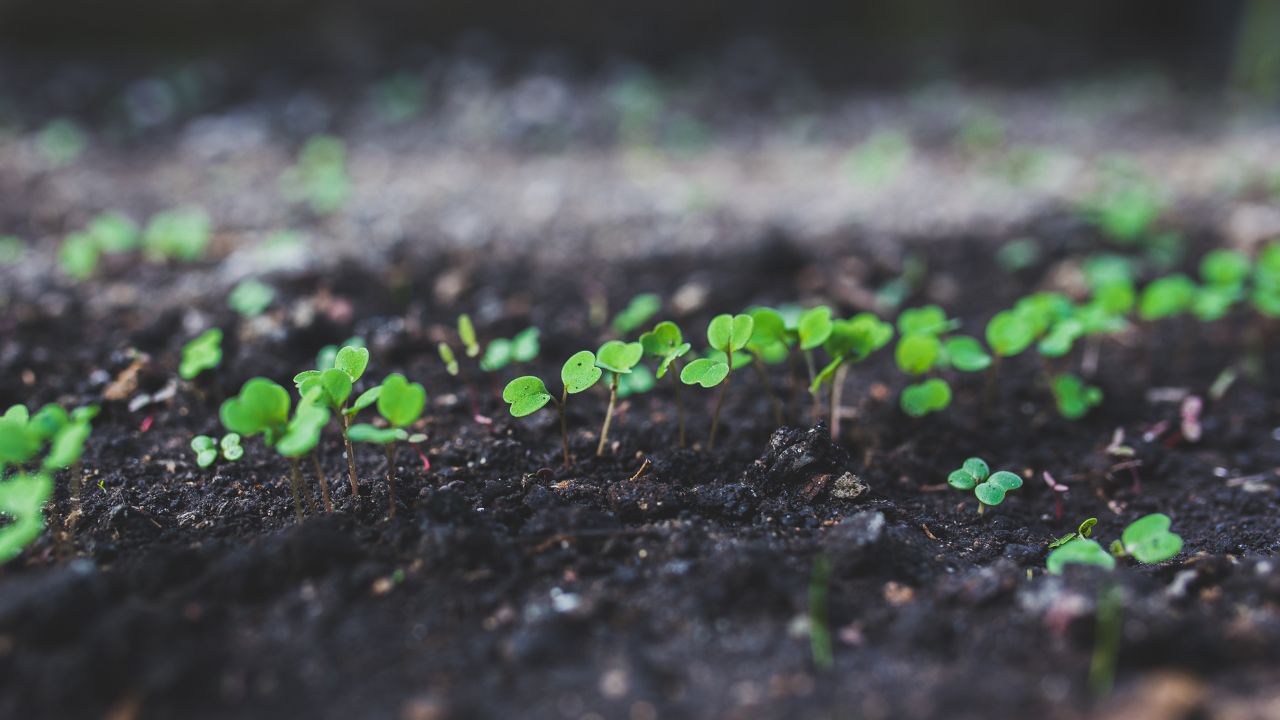
When it comes to crop establishment, small seeds leave very little room for error.
Whether you are planting carrots, onions, brassicas or herbs, achieving the correct seed depth and spacing can make the difference between a uniform, marketable crop and uneven emergence that affects yield, quality and profitability.
Small seeds contain limited stored energy. That means every millimetre matters. If seeds are planted too deep, seedlings may struggle to emerge. Too shallow, and they risk drying out before germination. Inconsistent spacing can also lead to competition for light, nutrients and moisture, creating uneven crops that are difficult to manage and harvest.
For growers, precision is everything.
Why seed placement matters
Uniform seed placement is one of the foundations of successful crop production. Consistent depth and spacing help crops emerge evenly, mature at the same rate and make better use of available resources.
Accurate planting also helps reduce waste. When seeds are positioned correctly from the start, growers are less likely to need costly reseeding or thinning later in the season.
This is where precision technology becomes essential, particularly in high-value vegetable production where uniformity directly impacts marketable yield.
Modern precision seed drills, such as those developed by Stanhay Webb, are designed to deliver this level of accuracy in real field conditions.
The challenge with small seeds
Small seeds behave very differently from larger crops such as maize or beans.
Their size and weight make them harder to handle consistently, especially when soil conditions change across a field. Variations in moisture, tilth and firmness can all affect how reliably seeds are placed.
Fine seeds are also more vulnerable to:
- Soil crusting after rainfall
- Poor seed-to-soil contact
- Uneven germination
- Competition from neighbouring plants
- Moisture loss in dry conditions
Because of this, growers rely on equipment that can maintain consistent planting depth and spacing, even when conditions are not perfect.

How precision seed drills improve consistency
Precision seed drills help remove variability from the planting process.
Equipment designed for vegetable production, including systems engineered by Stanhay Webb, focuses on accurate singulation and reliable seed placement. This ensures seeds are delivered consistently, row after row.
Key benefits include:
- More even crop emergence
- Reduced seed waste
- Improved plant spacing accuracy
- Better crop uniformity at harvest
- Greater efficiency across large areas
For growers, this consistency is what turns good seed into a reliable crop.
Getting depth right
Correct seed depth depends on seed type, soil condition and available moisture.
Small seeds generally need to be placed shallow enough to emerge quickly, while still sitting in contact with moisture in the soil profile.
Plant too deep and emergence slows. Plant too shallow and seeds risk drying out or being displaced.
The real challenge is maintaining that depth consistently across the entire field. Even small variations can lead to uneven growth stages, which complicates management later in the season.
This is why precise depth control remains a core strength of a well-designed seed drill.
The role of spacing in crop performance
Accurate spacing ensures each plant has equal access to light, nutrients and water.
When spacing is uneven, stronger plants tend to dominate weaker ones, leading to inconsistent growth and variable crop quality.
Good spacing also improves airflow through the canopy, which can help reduce disease pressure in certain crops.
For growers supplying retailers and processors, uniformity is not just an agronomic benefit but a commercial one. Consistent sizing and even growth make harvesting more efficient and improve pack-out rates.
Precision agriculture continues to evolve
As farming becomes more data-driven and efficiency-focused, precision planting continues to play a central role.
At Stanhay Webb we continue to refine seed drill technology to help growers achieve higher accuracy, better efficiency and improved crop establishment under a wide range of conditions.
At the same time, growers are under pressure to reduce input costs while maintaining yield and quality. Getting planting right first time is one of the most effective ways to achieve both.
Why growers choose Stanhay Webb
For decades, Stanhay Webb has focused on precision engineering for vegetable seed drilling, with a strong reputation among growers who demand accuracy and reliability.
The emphasis has always been on practical performance in the field, not just technical specification on paper. That means consistent seed placement, dependable operation and equipment that performs season after season.
Success in vegetable production starts with establishment. If the crop is uneven at the start, it is very difficult to correct later in the season.
That principle is exactly why precision at planting remains at the heart of what Stanhay Webb builds.
Small details make a big difference
Successful crop establishment often comes down to attention to detail.
For small seeds in particular, precise depth and accurate spacing are essential for creating even, healthy crops that perform consistently throughout the season.
With the right equipment and careful setup, growers can improve emergence, maximise seed performance and give crops the strongest possible start.
In modern vegetable production, small adjustments at planting can lead to significant gains at harvest. Stanhay Webb’s focus is to help growers achieve exactly that, season after season.